
How Colored Gemstone Rings Became the New Luxury Bridal Statement
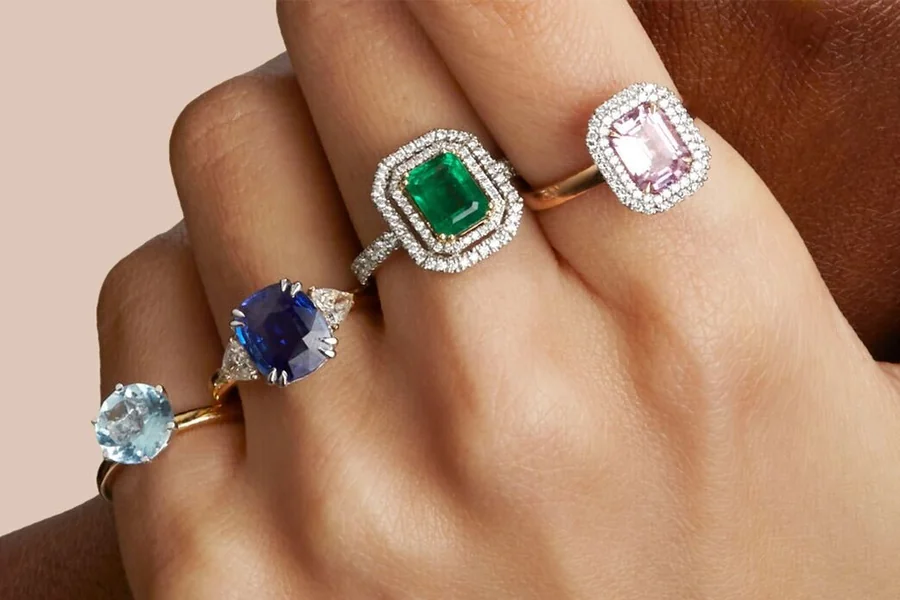
Step inside any engagement party in 2026 and have a look at how many colorless diamonds there are. It will be quite a surprise – not as many as you would have thought, and a lot more sapphires emeralds moss agates, and morganites than the ones that would have been present ten years ago. Colored gemstone engagement rings have transitioned from “alternative choice” to genuine luxury statement, and the change isn’t going to stop.
This is not just a trend on Pinterest or a celebrity impact. It is a real change of generation in the way that couples perceive an engagement ring, its role as a signal, and what really has significance for them.
The fascinating question is why now. There are multiple facets to the answer, and grasping them enables you to make a more intelligent decision whether you are purchasing for yourself or trying to understand what your partner truly desires.
The Diamond Monopoly Lost Its Grip
For most of the 20th century, the concept that an engagement ring had to be a colorless diamond was created – quite literally – one of the most successful marketing campaigns in history. De Beers constructed the “a diamond is forever” storyline in the 1940s, and for three generations, it was very effective.
That storyline began to weaken around 2015 and by 2026, it had completely fallen apart. Lab-created diamonds made colorless stones much more affordable. Transparency in sourcing became not only a real expectation but a standard. And young couples started questioning why they should spend three months of their salary on a stone chosen by an advertising agency instead of selecting something they really like.
When the “it has to be a diamond” principle vanished, the possibilities exploded. If the rule is gone, why not a sapphire? Why not the emerald that complements her eyes? Why not the birthstone? In no time the engagement ring was a work of art again, just like it had been before the diamond industry took over.
Royal Precedent Made It Respectable Again
The contemporary comeback of colored gemstones didn’t appear out of the blue. Princess Diana’s sapphire ring, which was worn by Kate Middleton later on, made the whole generation realize that colored stones are indeed considered a symbol of luxury.
Actually, sapphires rubies, and emeralds were the most highly regarded jewels after diamonds in European royal circles, with the latter being the most prestigious one. Eugenie’s padparadscha sapphire, Jackie Kennedy’s emerald and diamond ring, Elizabeth Taylor’s stunning jewelry pieces – these are not the things that most people would consider as crazy choices.
Usually, the most discerning people make a statement of refined taste when they select colored stones because these are the only ones that they really want, and the rest of the world is quite happy to see that they have the best stones at their disposal. Nowadays, couples get their inspiration from that history. A sapphire or an emerald bride is not the same as a diamond one. It is a way that gives access to something truly meaningful in bridal jewelry that even the 1940s marketing campaign when the diamond was popularized was not able to overshadow it is approximately 2,000 years older.
The Stones Actually Performing Well in 2026
Sapphire has emerged as the top choice for colored gemstone engagement rings and that’s quite justifiable. With a 9 rating on the Mohs hardness scale, a sapphire can very nearly endure everyday wear just like a diamond. Besides the traditional royal blue color, sapphires are found in all other colors as well – sea green pink yellow, peach, and the extraordinary padparadscha. Particularly, Montana sapphires have become a favorite of the alternative bridal market since they are domestic, ethically traceable and possess a blue-green watery quality that is very photogenic.
Emerald is the everlasting symbol of love and in a way the most unsuitable gem as well. It is softer than sapphire and in the majority of the cases it contains natural fractures also known as inclusions. These inclusions are considered by the emerald profession as natural features rather than flaws. As such, emerald jewelry, especially rings, requires very protective bezel type of settings, should be handled with utmost care and the wearer should be fully aware that he/she possesses a precious yet delicate piece rather than a durable one.
In the early 2020s, morganite was the pink gemstone that rose gold settings were paired with the most and today it still holds its position in the market. What makes it one of the favorites is the fact that it is cheap, medium to large-sized pieces can easily be sourced from the market and the dusty romantic color that not only photographs well but is very popular on social media as well.
Moss agate has emerged as the breakout star of the non-traditional bridal world. Each stone is genuinely one of a kind – those green inclusions are unique to that specific piece of agate, formed over millions of years, and no two rings look the same. That uniqueness is exactly what couples choosing this stone are after. Jewelers like Aquamarise have built entire collections around moss agate, Herkimer diamonds, alexandrite, and other distinctive stones precisely because the demand for something genuinely personal has grown so much faster than the traditional industry was prepared for.
Alexandrite is the quiet luxury pick. It changes color depending on the light – green in daylight, purple-red under incandescent bulbs – and natural alexandrite is rarer than diamond. Lab-grown alexandrite gives you the same optical magic at a fraction of the cost and has become a favorite for couples who want something most people have never seen before.
What “Luxury” Actually Means Now
The notion of luxury in bridal jewelry has, in fact, turned on its head. Two decades back, luxury was aligned with a certain set of symbols – a larger carat weight, a top clarity grade, a well-known retailer’s blue box, for example. It was all about legibility. The ring’s price was something pretty much anyone who saw it should be able to guess right away.
Well, that kind of signaling seems old-school, even a bit off-putting, nowadays. Today’s version of luxury is about being specific and telling a story. For example, a moss agate ring that the maker had to source over weeks because the cutter had to locate the exact piece of stone is luxury. A hand-carved vintage-inspired setting with a lab-grown alexandrite is luxury. A bezel-set Montana sapphire from a mine whose name you can actually mention is luxury.
It’s like the difference between a factory-made bag with a giant logo and a one-of-a-kind piece from a little workshop. Both are priced high. Only the second one reveals anything about who is wearing it.
This change in trend gives gemstones that show up in color a natural advantage. Each of them carries a story – the place of its origin, the level of rarity of its color, what makes this specific cut so special, why the chosen setting highlights it. There is a lot more to talk about than just the four Cs and this dialogue is what really makes the ring special.
The Practical Case for Color
Apart from the fashion issue, more than a few turning to colorful stones have very real reasons that also contribute to the fact that colored gemstones make most sense for many couples in 2026. They are much cheaper per carat than diamonds, also lab-grown ones, which means with the same amount of money you get a bigger, more eye-catching stone. In fact, most people don’t know right away if the $2,000 sapphire is different from the $8,000 sapphire but the difference in the visual impact of a two-carat ring as compared to a half-carat is so big that it can be seen even from a distance.
Besides, color can cover up the wear that would show on colorless stones. Sapphires, emeralds, and morganites don’t reveal the slight cloudiness or surface abrasion that might come on softer diamonds after long periods of wear. The color covers what colorless stones reveal. And on a practical basis, it is almost impossible to confuse a colored gemstone with someone else’s ring. Among a crowd of solitaires, yours stands out. This owner-ism – I have this, my partner and I have this, no one else has the exact thing – was actually one of the less obvious reasons why couples started going for color.
Where This Is Heading
A shift to colored gemstones as a key component of engagement ring style has changed the model of the ring-buying decision. One major way this change will be sustained is that today’s young couples have grown up with the mindset of customization for everything they buy – sneakers cars coffee – so it is perfectly natural for them to have this mindset when making their purchase decision for the most expensive jewelry item they will ever buy. And, of course, they have no intention to go backwards on this habit!
If you are a little unsure about buying a colored gemstone for your engagement ring for fear it might be a fashion “fad” that will be dated in 10 years, take comfort in knowing the answer is close to a no. The kind of piece that will be most out-of-date is the generic solitaire that could have belonged to anyone. What becomes a family heirloom is that ring which is unequivocally yours, a ring you specifically chose because you fell in love not only with the stone but also with the setting.