
Is the “Velvet Rope” Era Dead? Why New York is Trading Basement Clubs for 1,000-Foot Glass Boxes
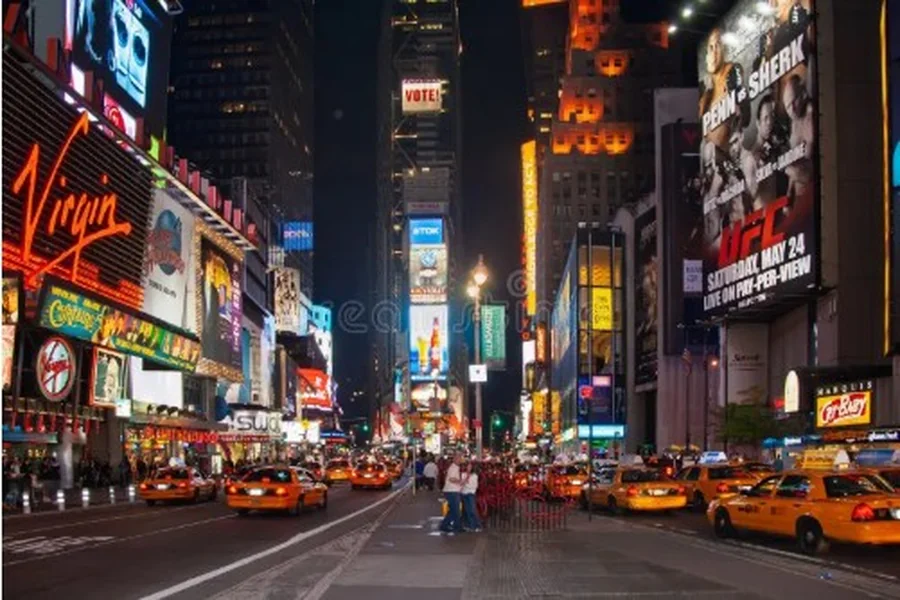
For over half a century, the blueprint for a successful night out in Manhattan was resolutely subterranean. From the grit of CBGB to the glittering exclusivity of Studio 54, the formula remained largely unchanged: find a dark room, turn the music up until conversation becomes impossible, and station a daunting bouncer at the door to manufacture a sense of scarcity.
The ultimate social currency was getting past the velvet rope. Once inside, the objective was simply to be seen in the shadows.
But as we navigate the late 2020s, that formula is fracturing. A new demographic of residents and travelers is actively rejecting the cramped, sensory-depriving basements of the past. Instead of descending into the dark, they are riding high-speed elevators into the stratosphere. They are trading the bass-heavy club for 1,000-foot glass boxes, immersive art installations, and infinite mirrors.Link Building Agency
We are witnessing the death of the velvet rope, replaced by the democratization of awe.
The Shift from Intoxication to Immersion
To understand why this shift is happening, we have to look at the broader “experience economy.” Today’s urban explorers are highly selective with their time and money. The prospect of paying a premium just to stand shoulder-to-shoulder in a crowded, sticky-floored lounge no longer holds the appeal it once did.
People are seeking something that cannot be replicated at home or easily summarized in a quick text message. They are looking for immersion.
When you elevate a social space 90 stories into the sky, you fundamentally alter the psychological baseline of the evening. The dark club relies on isolation—shutting the city out to create a fabricated vibe inside. The high-altitude glass box does the exact opposite. It brings the entire, sprawling, chaotic grid of the metropolis into the room.
This evolution represents a fundamental shift in NYC nightlife, moving away from environments designed to numb the senses and toward environments designed to overwhelm them with beauty, scale, and perspective.
The Adrenaline Alternative
There is also a fascinating biological component to this new vertical trend. Traditional clubs rely heavily on alcohol to lower inhibitions and create a buzz. The new wave of high-altitude experiential spaces relies on physics and architecture to achieve a similar physiological effect.
When you step onto a glass ledge extending out over Madison Avenue, or walk into a room where the floor and ceiling are perfectly mirrored to create the illusion of infinite empty space, your brain registers a sudden, thrilling spike of vulnerability.
- The “Safe Danger” Response: Your rational mind knows the structural glass is engineered to hold thousands of pounds. Your primal brain, however, only sees a 1,000-foot drop.
- The Dopamine Hit: This cognitive friction triggers a controlled release of adrenaline and dopamine.
You get the euphoric rush of a thrill ride, but in a sophisticated, highly curated environment. It is a biological buzz that leaves you energized rather than exhausted, fostering a remarkably clear-headed and vibrant social atmosphere.
The “Art-Party” and the Death of Small Talk
Perhaps the most significant casualty of this architectural shift is the traditional mechanics of socializing. In a standard bar, interaction is often confined to your immediate circle, usually involving strained small talk over loud music.
When an entertainment space is built around massive, interactive art installations—like rooms filled with floating silver spheres, or dynamic light shows that synchronize with the city’s pulse—it acts as a universal icebreaker. The environment demands your attention, pulling you out of your digital devices and forcing you into the present moment.
You cannot maintain a stoic, detached posture when you are trying to navigate a room where the ceiling reflects the floor and the skyline is bouncing off a dozen different angles. The disorientation strips away social pretense. People laugh, they lose their balance, they point out reflections to strangers. The shared experience of awe naturally dismantles the rigid social barriers that the velvet rope was originally designed to build.
A New Aesthetic of Illumination
Finally, there is the undeniable visual reality of the modern era: we live in a highly documented world.
The subterranean club, with its strobe lights and dark corners, is notoriously hostile to being captured or remembered clearly. The modern experiential space, heavily utilizing glass, mirrors, and curated LED lighting, is designed to be visually spectacular from every possible angle.
But it goes deeper than just chasing a photo. It is about the aesthetic of illumination. Watching the sunset turn the Hudson River gold from 1,000 feet up, and then watching the millions of tungsten and LED lights of the city grid slowly flicker to life beneath your feet, is a deeply moving experience. It is a reminder of the sheer scale of human engineering and ambition. It provides a sense of connection to the city that you simply cannot feel from street level.
Conclusion
The era of begging a doorman for entry into a dark room is quietly fading. In its place, a new standard for a night out has emerged—one that values clarity over darkness, connection over exclusivity, and architectural wonder over bottle service.
By pushing entertainment into the clouds and replacing the walls with glass and mirrors, the city has found a way to make the skyline itself the main event. It turns out, the best way to escape the pressure of the city isn’t to hide in a basement; it’s to rise above it and watch it glow.