
Lingerie Trends for 2026: Why Comfort and Confidence Are Leading the Shift

For decades, lingerie trends were driven by fantasy. Campaigns centered on spectacle, silhouettes were engineered for visual impact, and comfort was often secondary to aesthetics. But in 2026, the conversation has matured. Lingerie is no longer about transformation for someone else’s gaze, it is about alignment with one’s own body, lifestyle, and sense of ease.
The shift is not subtle. It reflects broader cultural recalibration: toward authenticity, toward wearability, toward pieces that serve the wearer rather than constrain her.
Comfort and confidence are not opposing forces anymore. They are the new design standard.
The End of Performance Dressing
In the early 2000s and even through much of the 2010s, lingerie trends emphasized structure: push-up padding, rigid underwires, sculpting panels, and tightly contoured fits. The goal was enhancement.
Today, the goal is integration.
Women are increasingly choosing bras and underwear that move naturally with the body, accommodate real daily rhythms, and support rather than reshape. Hybrid work environments, wellness-oriented lifestyles, and growing conversations around body neutrality have reshaped expectations.
Lingerie is no longer reserved for occasions. It is worn for eight, ten, sometimes fourteen hours a day. That reality has forced brands to reconsider priorities.
Fabric Innovation: Softness as Structure
One of the defining elements of lingerie in 2026 is advanced softness. Micro-modal blends, seamless knits, and flexible support bands are replacing heavy padding and stiff boning.
But softness no longer means lack of support.
Designers are investing in engineered fabrics that distribute weight evenly and reduce pressure points. Wide, smooth straps prevent shoulder strain. Flexible underbands provide stability without digging. Breathable materials enhance long-wear comfort.
This shift reflects a deeper understanding of how garments affect posture, mood, and even productivity. According to research cited by the American Academy of Dermatology, prolonged friction and restrictive clothing can contribute to skin irritation and discomfort, an issue increasingly acknowledged in intimate apparel design.
Comfort, in this context, is not indulgence. It is practical.
The Rise of the Everyday Bra
The most significant commercial growth in lingerie has moved away from heavily structured push-up styles and toward versatile, everyday bras.
Consumers are seeking pieces that transition seamlessly from morning meetings to evening errands. Lightly lined cups, wireless support systems, and smoothing silhouettes are replacing overly engineered shapes.
Brands that center comfort without sacrificing aesthetic refinement are resonating strongly. Harper Wilde, for example, has become known for soft, supportive bras designed for real comfort and everyday wear. Rather than focusing on dramatic enhancement, the brand emphasizes thoughtful construction, flexible support, and fabrics that feel barely there, aligning perfectly with the current consumer mindset.
The appeal lies in reliability. When lingerie works invisibly beneath clothing, without constant adjustment, it allows the wearer to focus outward, not inward.
That subtle freedom is powerful.
Inclusive Fit as Standard Practice
Another defining feature of 2026 lingerie trends is the normalization of inclusive sizing. Extended band and cup ranges are no longer niche offerings but baseline expectations.
Fit technology has also improved. Many brands now utilize advanced measurement systems, flexible sizing matrices, and adaptive materials that accommodate slight body fluctuations. The industry has acknowledged what consumers have always known: bodies change, throughout the month, across life stages, and over time.
This evolution reinforces a broader cultural shift away from “fixing” the body and toward supporting it.
Aesthetic Minimalism with Emotional Impact
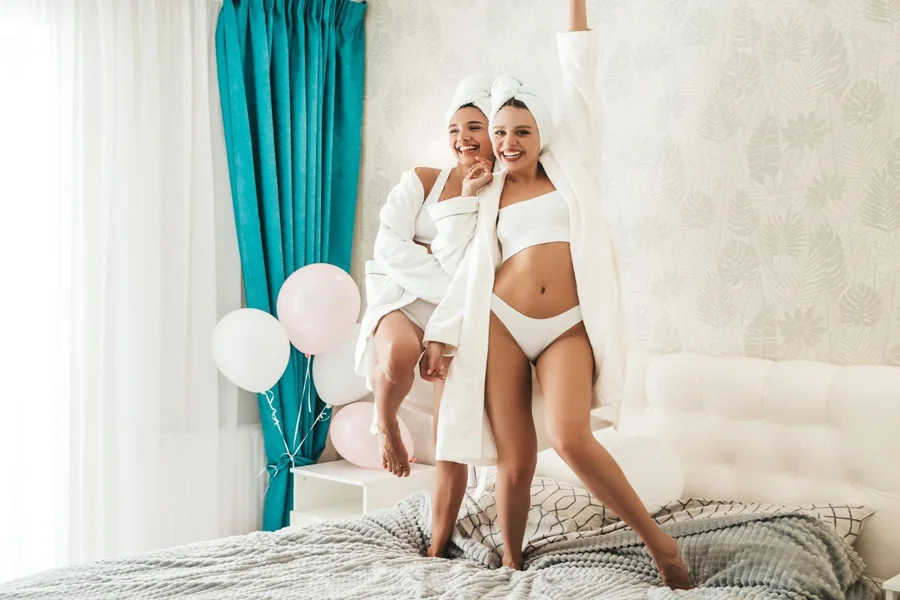
While comfort leads the design conversation, visual appeal has not disappeared. Instead, aesthetics have become subtler and more intentional.
Neutral tones dominate, warm beige, cocoa, slate, soft rose. Lace is used sparingly, often layered over smooth fabrics rather than as the structural base. Clean lines, matte finishes, and minimalist hardware are preferred over ornate embellishments.
The result is lingerie that feels contemporary rather than performative.
Interestingly, this minimalism often enhances confidence more effectively than overtly dramatic designs. When a garment feels aligned with one’s identity, neither exaggerated nor restrictive, confidence becomes internal rather than externally validated.
The Psychological Shift: Confidence from Within
Perhaps the most significant transformation in lingerie culture is psychological.
In previous decades, lingerie marketing often centered on being seen. Today, the emphasis is on how it feels to wear. The distinction may seem small, but it signals a profound shift. Comfort influences posture. Posture influences presence. Presence influences confidence.
When lingerie does not pinch, gap, slide, or constrict, it becomes an invisible foundation. That invisibility creates mental space.
Women are increasingly prioritizing pieces that allow them to forget what they are wearing, not because it is insignificant, but because it functions seamlessly. The luxury is not spectacle; it is effortlessness.
Sustainability and Longevity
Like other fashion categories, lingerie is also responding to sustainability pressures. Consumers are investing in fewer, higher-quality pieces rather than frequently replacing lower-cost alternatives.
Durable elastic, reinforced stitching, and resilient fabric blends extend garment lifespan. Brands are emphasizing wash-care education to preserve elasticity and shape.
In this sense, comfort and sustainability intersect. Well-made pieces that retain support over time reduce both waste and wardrobe frustration.
What 2026 Signals for the Future of Intimates
The lingerie landscape of 2026 reflects maturity, both cultural and commercial. The era of discomfort disguised as glamour is fading. In its place is a quieter confidence built on fit, softness, and structural intelligence.
Designers are listening more carefully to lived experience. Consumers are responding with loyalty to brands that prioritize daily reality over fantasy narratives. Comfort is no longer the compromise option. It is the aspirational one.
And confidence, it turns out, is not created by adding more structure, but by removing what no longer serves. In 2026, lingerie does not ask women to transform. It supports them exactly as they are.