
How to Specify Compression Springs for Industrial Applications
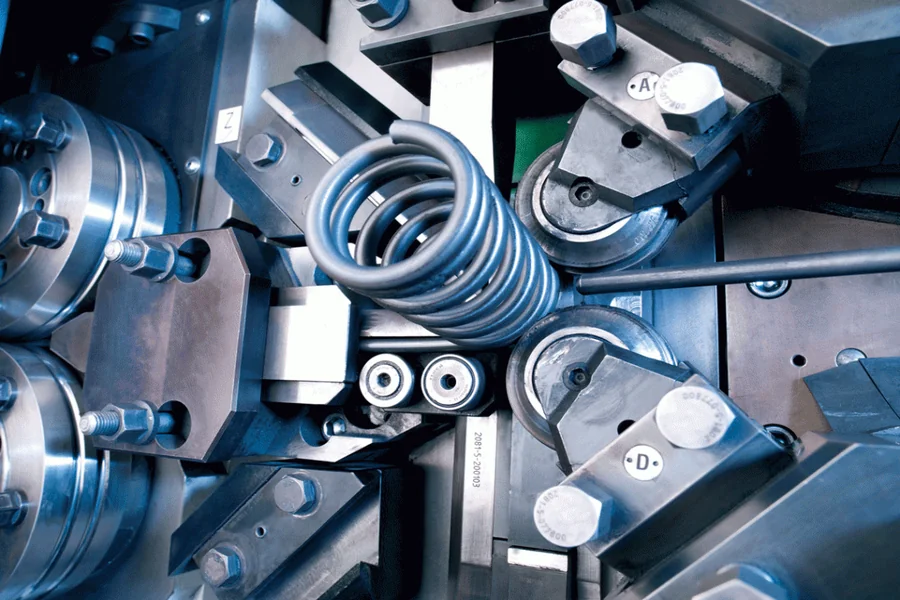
Hagens is a compression spring manufacturer producing springs with wire diameters from 0.1 mm to 25.00 mm, covering everything from precision instrumentation to heavy-duty industrial machinery. Springs come in galvanized, painted, or custom finishes, and each unit is engineered to meet specific static or dynamic load requirements.
Why Standard Springs Fall Short in Industrial Use
Standard compression springs are everywhere on paper. In practice, they are rarely stocked locally, and they are never engineered to match the exact force, travel, and load profile of your machine.
That gap matters more than it looks. A spring picked because it was the closest available size will sit slightly off its intended working range. Under a static load that might go unnoticed for years. Under a dynamic load, with the spring cycling thousands of times a shift, the mismatch shows up as accelerated fatigue and eventual fracture.
A spring is one of the least expensive components in an industrial machine. When it fails, it can stop an entire production line, and the downtime cost dwarfs the part cost by orders of magnitude.
That imbalance is why sourcing from a specialist compression spring manufacturer with the technical range to match your exact application beats grabbing whatever fits the hole.
Specifying a Compression Spring for Demanding Applications
Getting the specification right before you order saves the expensive lesson later. Work through these parameters in order.
• Define the load type first. A static load holds a fixed position, while a dynamic load cycles repeatedly. This single distinction drives almost every other decision, especially fatigue life and wire selection.
• Set the wire diameter range. Precision instruments may need wire down to 0.1 mm, while heavy machinery can call for up to 25.00 mm. The wire diameter governs stiffness and how much force the spring delivers per millimetre of travel.
• Fix the working forces and travel. Note the force at installed length and at maximum compression, plus the free length. These numbers let the manufacturer engineer the coil count and pitch to match.
• Describe the operating environment. Temperature swings, moisture, chemical exposure, and vibration all shorten spring life if ignored.
• Choose the finish. Galvanized, painted, or a custom coating each suit different conditions. The finish is corrosion protection, not cosmetic.
• State the tolerance class. Tight tolerances cost more but matter where consistent force output is critical.
Hagens produces springs across the full 0.1 mm to 25.00 mm range, which means the specification can be built around the application instead of the application being squeezed into whatever the catalogue offers. Send the mounting details too – buckling under load is a failure a good manufacturer can design out early.
Material and Finish Decisions That Affect Durability
Material and surface finish decide how long a spring survives real conditions. The three killers are corrosion, temperature, and cyclic fatigue.
In a dry, indoor, low-cycle application, a galvanized finish handles corrosion perfectly well. Move that same spring outdoors, or into a washdown area in food processing, and the finish choice becomes the difference between years of service and rust within months. For aggressive chemical exposure or high heat, a custom finish matched to the environment is the only reliable route.
Hagens offers galvanized, painted, and custom finishes. Match it to the environment you actually run in, not the one on the datasheet.
Common Mistakes When Sourcing Industrial Springs
Most spring failures trace back to sourcing shortcuts rather than manufacturing faults. Because standard springs are seldom stocked locally, specifying custom springs built to the exact application is what protects uptime when a machine cannot wait for a delivery.
• Defaulting to the nearest available standard size instead of the correct one, then wondering why force output drifts.
• Treating a dynamic load as if it were static, which ignores fatigue entirely and shortens life dramatically.
• Underspecifying wire diameter to save cost, leaving the spring working too close to its stress limit.
• Overlooking whether the finish suits the operating environment, so corrosion sets in early.
• Assuming shelf springs are locally available the moment a line goes down, when the reality is a wait.
A spring is cheap, so it gets the least attention during specification, yet it carries an outsized risk when it fails.
The Practical Takeaway
Getting a compression spring right requires matching the part to the application rather than the nearest available size. When the tolerances are tight and the load is dynamic, that distinction is what separates a machine that runs from one that stops.