
Why are Superheat and Subcooling Basics Homeowners Rarely Hear Explained?
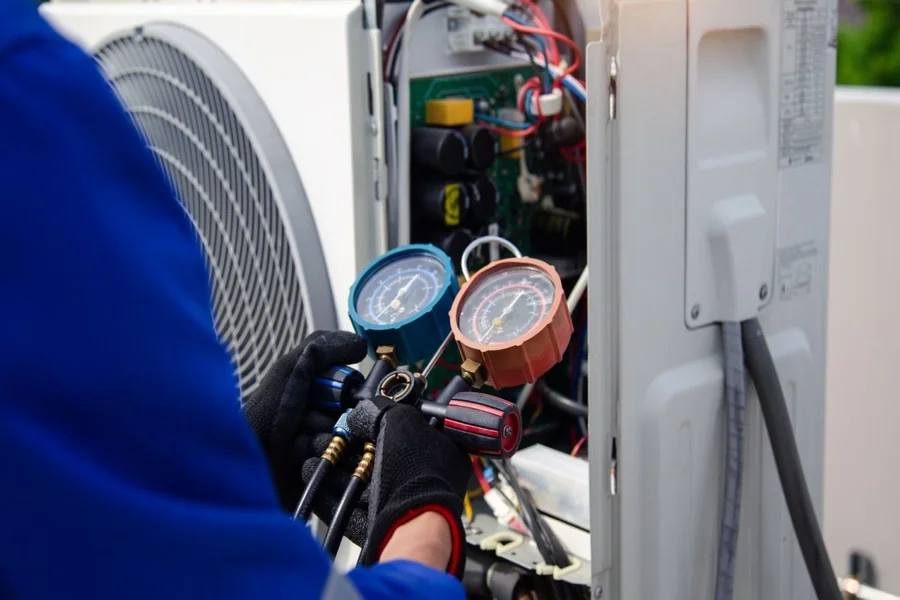
Superheat and subcooling sound like technician jargon, yet they describe simple temperature relationships that reveal how an air conditioner feeds and condenses refrigerant. Homeowners often hear vague comments like “the charge looks off” or “the pressures are weird.” Still, a more useful story is how refrigerant changes phase within the system and why the temperatures around those phase changes matter. Superheat helps confirm what is happening on the evaporator side, where heat is absorbed, while subcooling helps confirm what is happening on the condenser side, where heat is rejected. These numbers do not replace good airflow and clean coils, but they can provide clues to explain poor cooling, coil icing, high energy use, and compressor stress. When described in plain language, they also explain why unthinkingly adding refrigerant can create bigger problems.
What these numbers actually mean
-
Refrigerant states and why temperature matters more than guesses
An AC works by moving refrigerant through two main heat exchangers. In the indoor coil, liquid refrigerant boils into vapor as it absorbs heat from the house air. In the outdoor coil, the vapor releases heat and condenses back into liquid. The key idea is that boiling and condensation occur at temperatures that depend on pressure. That is why technicians measure pressure and convert it to a saturation temperature using a refrigerant chart or digital gauge set. Superheat and subcooling are then calculated by comparing the saturation temperature to actual pipe temperatures. Superheat is the number of degrees the vapor refrigerant is warmed above its boiling point after it finishes boiling in the evaporator. Subcooling is the number of degrees the liquid refrigerant is cooled below its condensing temperature after it leaves the condenser. These measurements help confirm whether the evaporator is being fed properly and whether the condenser is delivering a solid column of liquid to the metering device. Without these numbers, a system can look fine at a glance while quietly running with improper feeding, poor heat transfer, or a charge level that puts the compressor at risk.
-
Superheat in plain language and what it reveals.
Superheat answers a basic question: did all the liquid refrigerant finish boiling before it left the indoor coil, and is the vapor leaving the coil warm enough to protect the compressor from liquid floodback? If the vapor leaving the evaporator still contains liquid droplets, the compressor can be damaged because it is designed to compress vapor, not fluid. Superheat is measured by taking suction line pressure, converting it to saturation temperature, and subtracting that saturation temperature from the measured suction line temperature at the correct location. A higher superheat reading generally suggests the evaporator is underfed, which can be caused by low refrigerant charge, a restriction, a metering device problem, or low airflow that changes how heat is picked up. A very low superheat reading can indicate overfeeding, which can result from an overcharged system, a failed metering device, or airflow issues that prevent proper heat absorption. Fleetwell Air Conditioning, Heating, and Plumbing often explains to homeowners that superheat is not a standalone indicator because airflow, indoor load, and coil cleanliness can shift the reading; it becomes meaningful only when taken under stable conditions and paired with subcooling and temperature split data.
Understanding these intricate refrigeration cycles is essential because they directly impact how hard your equipment must work to maintain set temperatures. When a system struggles with improper pressure levels, it often leads to premature component wear that mirrors the mechanical failures addressed by a professional furnace repair service in Richmond during the colder months. Just as subcooling ensures a solid column of liquid reaches the expansion valve, proper heating diagnostics ensure that heat exchangers and ignition systems operate without safety risks. Maintaining this balance throughout the year prevents small efficiency losses from snowballing into catastrophic system breakdowns, ultimately protecting your long-term investment in home comfort.
-
Subcooling explained and why liquid quality matters.
Subcooling focuses on the outdoor side and helps confirm whether the condenser is turning vapor into a stable liquid supply. After the refrigerant condenses on the outdoor coil, it should leave as a liquid, then be cooled slightly below its condensing temperature. That extra cooling is subcooling, and it helps ensure the metering device receives a solid column of liquid rather than a mixture of liquid and vapor. If vapor is present in the liquid line, the metering device may feed the evaporator inconsistently, creating temperature swings, poor humidity control, and odd cycling. Subcooling is measured by taking the liquid line pressure, converting it to saturation temperature, and then subtracting the measured liquid line temperature. Higher subcooling can indicate that too much refrigerant is stored in the condenser or liquid line, often associated with overcharging, restricted airflow across the condenser, or a downstream restriction that backs up refrigerant. Low subcooling can indicate an undercharge or a condenser that is not fully condensing the refrigerant due to noncondensables, airflow issues, or an extreme heat load. Subcooling is especially useful in systems with TXV metering devices, where it is often the primary charging metric, while superheat is used more as a confirmation tool.
Superheat and subcooling are temperature differences that reveal how refrigerant is boiling indoors and condensing outdoors. Superheat helps confirm that the evaporator is properly fed and that the vapor leaving the coil is safely superheated above saturation. In contrast, subcooling helps confirm that the condenser is delivering stable liquid to the metering device. These readings become meaningful only when airflow, cleanliness, and operating conditions are stable, because dirty coils, restrictive filters, and poor airflow can imitate charge issues. Understanding the basics helps homeowners see why quick refrigerant top-offs can be risky and why technicians ask for time, steady runtime, and clean airflow paths before deciding what the system needs. When the numbers match the system design and the airflow is healthy, cooling becomes more consistent, and equipment stress tends to drop.