
Daycare vs Preschool in Iowa: What’s the Difference, What Age to Start
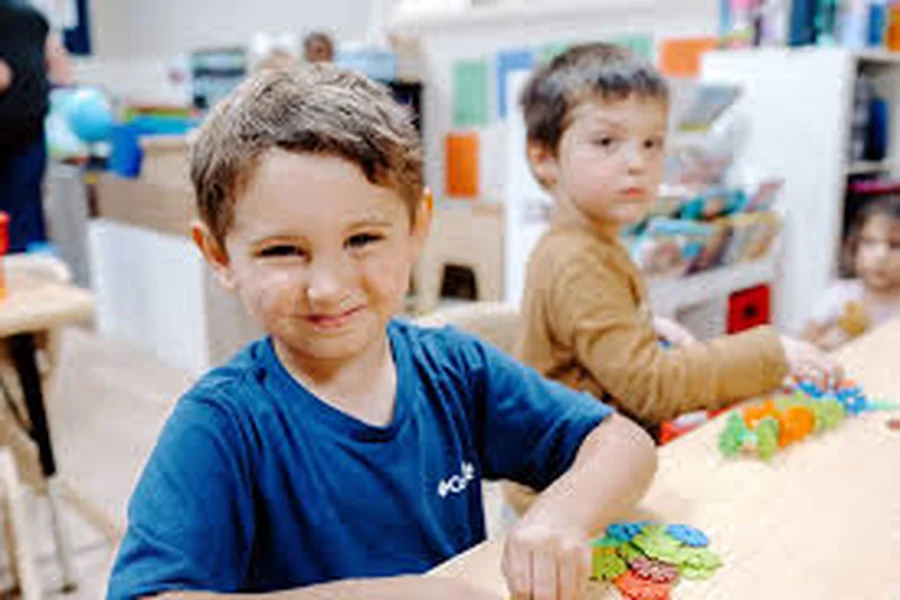
In families and among communities, early education isn’t something you casually “pick.” It requires the “intentionality” that distinguishes high-quality early childhood education from basic supervision. Also, your choice as a parent should sit right with your work schedules, financial pressure, emotional responsibility, and the quiet pressure of wanting to get it right the first time. This is not just a decision to make, but more like a high-stakes investment in who a child is becoming.
And the truth? It is.
1. Consider the Developmental Divide: When Care Aligns With Needs
There’s a point where early childhood spaces stop being simple supervision zones and start becoming structured environments that shape thinking itself. That shift doesn’t always announce itself loudly. It happens in rhythm, tone, and intention.
Walk into a child-centered environment, you will experience well-curated spaces that helps shift from an approach of functional supervision to developmental mastery:
Ø Some spaces are built to keep children safe and steady
Ø Others are built to shape how children think, respond, and connect
Ø And a few actually do both without breaking the child’s natural flow
In such a well-curated Preschool in Des Moines, the day isn’t random, it’s designed. Not rigid, but intentional. You see it in how transitions are handled, how attention is guided, and how curiosity is treated like something worth protecting.
People in the field often say it plainly: the shift is from holding children to developing them in motion. That’s where the real developmental line is drawn—not on paper, but in practice.
2. Daycare vs Preschool: Balancing Age and Readiness
Most conversations get stuck on labels. Daycare. Preschool. Age brackets. But in reality, children don’t grow in generic categories, they grow in signals.
Experienced educators look for something more honest:
Ø Is the child starting to tolerate structured group moments without overwhelm?
Ø Can they follow a sequence without constant re-centering?
Ø Are they beginning to want structure, not just freedom?
When those signals appear, environment matters more than terminology. In Central Iowa, families often discover something important: daycare supports the early rhythm of dependency and comfort, while preschool introduces a different expectation; participation, not just presence.
And the goal isn’t acceleration. It’s alignment. Because forcing structure too early creates resistance. But delaying it too long creates friction later when school systems expect readiness that hasn’t been gently built. Good decisions here are not emotional guesses, they’re observations over time.
3. The Power of Play Factor: Where Serious Learning Hides in Plain Sight
Play is often misunderstood because it doesn’t look like “learning” in the traditional sense. But that’s exactly why it works. High-quality early education spaces don’t treat play as filler time, they treat it as the operating system of development.
Through purposeful play, children naturally build:
Ø Problem-solving without fear of failure
Ø Real-time negotiation with peers
Ø Language growth that feels natural, not forced
Ø Cognitive flexibility through repetition with variation
Unlike memorization, which asks children to repeat what they’re told, play asks them to figure things out while they’re inside the experience. That difference changes how the brain wires itself.
And the best educators? They don’t dominate it. They protect it. They step back when needed. Step in only when it adds depth. And most importantly—they know when not to interrupt something that is already working. As such, that restraint is not passive, it’s skill.
4. Transitioning to Kindergarten: When Structure Becomes the New Normal
Kindergarten doesn’t just introduce academics. It introduces systems like timelines, expectations, group coordination, and attention rules. Children who come from thoughtfully structured preschool environments don’t experience that shift as shock. They experience it as continuation.
You can usually see readiness in quiet, practical ways:
Ø They can follow multi-step directions without emotional overload
Ø They can function in group settings without losing focus completely
Ø They already understand that attention sometimes has to be shared
The point isn’t to “prepare children early for pressure.” It’s to make sure pressure doesn’t feel foreign when it arrives. Because the real goal of preschool isn’t academic speed—it’s emotional and behavioral stability inside structure. That’s what makes later learning sustainable.
In essence, at its core, early education isn’t a branding decision or a checklist exercise. It’s an alignment process between a child’s natural development and the environments that shape it. The strongest outcomes don’t come from urgency. They come from observation, patience, and environments that understand when to guide—and when to simply let development unfold at its own intelligent pace.