
The Impact of AI on Entertainment Industry Today
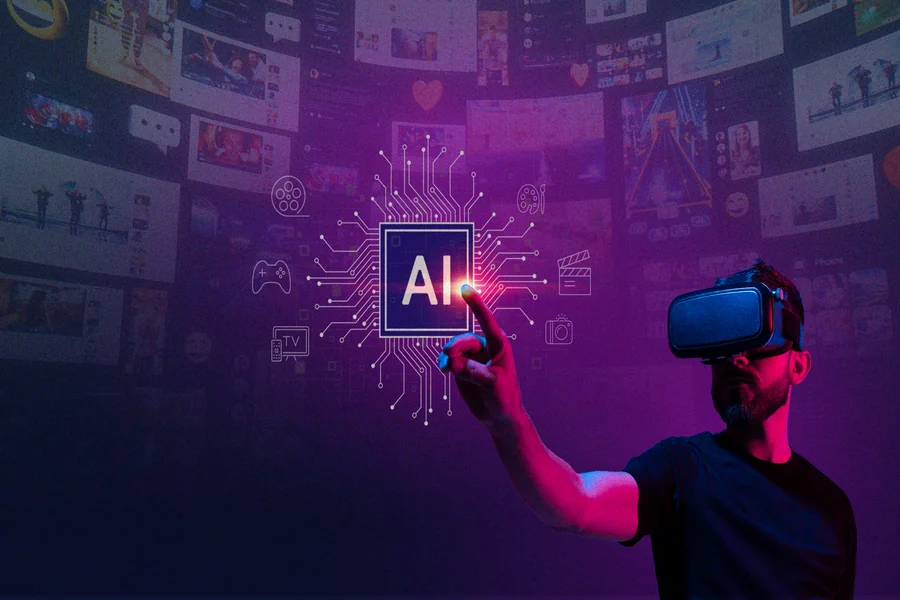
Artificial Intelligence (AI) is reshaping the landscape of practically every industry, and its impact on the entertainment world has been particularly pronounced in recent years. AI is transforming the entertainment industry in various ways, including in filmmaking, music production, video games, streaming platforms, digital marketing, and celebrity interactions. With the assistance of AI technologies, creators are producing content at a faster pace, are enhancing the engagement of their audiences, and are customizing entertainment experiences in ways that were previously unattainable.
Advanced technologies have become essential for entertainment companies to stay competitive, from using AI to create music and realistic visual effects to automated video editing. Meanwhile, machine learning’s recommendation and interactivity features enable audiences to connect with content in new ways. Many people are looking forward to these innovations, but some are concerned about the industry’s future with human workers and creativity and ethics.
AI isn’t a futuristic concept in the entertainment industry anymore. It is already changing how films are produced, how music is created, how people listen to music every day, and so on.
Artificial Intelligence for Film Production and Visual Effects
AI is revolutionizing the film industry by enhancing production efficiency and cutting expenses.AI is transforming the film industry, boosting efficiency and lowering costs. AI is making a significant impact on movie production, particularly in script analysis, casting, editing, and post-production phases. The systems can gauge the tastes of their audience and forecast what movies they might make that will be commercially successful. Many movie lovers explore bored flix while searching for entertainment resources.
AI technologies have revolutionized the field of visual effects. Realistic digital environments, de-age actors and complex animation are created more quickly and accurately. With AI-driven editing tools, editors can save hours of time by automatically organizing footage, identifying and fixing errors, and suggesting improvements to the scenes.
The first thing you’ll notice is the incorporation of virtual production. With the help of AI and powerful graphics engines, filmmakers can now generate a digital render of a set in real-time, rather than having to use a physical location. This took on more popularity when the world’s production problems required more flexible outlets.
In the entertainment industry, deepfake technology has also garnered controversy. It can also generate actors digitally in the context of stories, though concerns are rising about how it can be misused and misinformed. There are already a number of studios that are creating guidelines on the ethical use of AI-generated images.
Yet, in spite of these worries, AI is still advancing the frontiers of cinema narration. The technology being employed by Directors and Producers is not to replace creativity it is to take the screen to new levels of possibility.
The music industry is also transforming due to AI.AI is also reshaping the music industry
AI is also transforming music creation and dissemination. AI software has revolutionized the way musicians and producers create music, offering tools for composing melodies, generating beats, enhancing sound quality, and automating repetitive tasks. Such tools enable creators to concentrate on artistic direction, and the technical aspects can be handled by the technology.
AI recommendation systems are crucial for streaming platforms. These services can track users’ music consumption patterns and recommend songs, playlists, and artists based on their preferences. This customization boosts the engagement of the audience with the listener and can enable independent musicians to have their music available to more people.
Music generated by AI is yet another big deal. Some systems are able to generate new compositions from existing genres, moods or instruments within seconds. This is an amazing technology, yet it has begun discussions on originality and ownership. Many artists have expressed concerns that over-automation might diminish the emotional quality that has long been associated with music.
The ways in which live performances are changing are also evolving. Concerts are now enhanced with lighting mechanisms, sound optimization and interactive stage effects powered by AI. Even some virtual artists and hologram performers engage in artificial intelligence interaction with fans during live shows!
Record labels are leveraging machine learning to forecast trends in music and to determine which songs could be hits. Social media and streaming data allows businesses to better understand how their audience consumes content and inform decisions on artist promotion and marketing.
Streams and personalised entertainment
One of the largest applications of AI for entertainment is streaming services. Movie and TV and music platforms apply a machine learning algorithm to analyze their users’ behavior and make personalized suggestions. In this way, viewers stay invested for extended periods and are more likely to be satisfied with the viewing.
People will stick with a website longer when it provides them with suggestions that they can enjoy. AI systems process the history of the watches watched, search patterns, ratings, and viewing time to develop very personalized content libraries.
The streaming industry is highly competitive, and recommendation engines have emerged as a must-have for these services. AI can not only offer suggestions for content, but also help companies make decisions on which original productions to invest in.
AI is also contributing to the enhancement of subtitle generation, language translation, and accessibility features. Real-time translation solutions improve entertainment experience in various countries and cultures. This has helped to drive the swift expansion of the entertainment markets globally.
The other significant trend is the creation of AI-powered trailers and promotional materials. Automated systems can recognize interesting scenes, emotional moments, and audience interests, and generate content for marketing that will capture interest.
AI’s influence on streaming services is set to grow even more significant as they continue to expand into global markets.
The Gaming and Virtual Experiences Landscape Transformed by AI
One of the most significant sectors where AI has made a profound impact is the gaming industry.Artificial Intelligence has been one of the biggest beneficiaries and has made a significant impact in the gaming industry. AI systems enhance gameplay, develop NPCs, and offer adaptive experiences by analyzing player actions. Today’s video games utilize high level machine learning to create more lively, interesting digital environments.
AI is employed in game development to make the game more dynamic and intelligent.AI can be used in game development to make the game smarter and more responsive. Now the characters in games can respond to the actions of players, making the game more difficult and realistic. AI also enables game developers to test games quickly, as it detects bugs and balances game mechanics.
But another key innovation is procedural content generation. AI can create maps, missions, storylines, and environments to save time and boost creativity in game development. This enables the studios to create more complicated games and games of larger scale.
AI technologies are making VR/AR experiences more interactive. Systems of facial recognition, motion tracking, and voice interaction enable the player to interact more naturally with the digital environment.
Artificial Intelligence is also playing a pivotal role in the world of esports and online gaming platforms. AI systems analyze player performance, identify cheating, and enhance the matchmaking process to ensure fairer games.
AI’s application to gaming keeps taking entertainment to the next level in a very personalized and immersive way that was only seen in Sci-Fi.
AI and Content Creation on Social Media
Social media platforms have revolutionized the entertainment industry and its consumption. With the assistance of artificial intelligence, creators can edit videos, create captions, find trends and boost engagement. AI tools are being used by many influencers and digital creators to help boost productivity and extend their reach to their audience.
Short-form video apps employ recommendation algorithms to ensure that their users stay engaged by the content that is most relevant to them. User interactions, viewing time and interests as shown by user behaviour determine which videos will be displayed on the feed using AI.
Automated editing tools have made it possible for novices to create content. With the help of AI, you can edit videos without needing any special technical expertise, and it can eliminate background noise, enhance video quality, add subtitles, and create visual effects.
Another trend is virtual influencers. These computer-generated personalities interact with their followers and market brands online through the use of artificial intelligence. Others, even if not real people, have won millions of fans.
Nevertheless, a doubt is still brewing about the authenticity. Sometimes audiences can find it difficult to tell the difference between AI-generated and real content. This brings up some significant issues of transparency, trust, and digital ethics in media and entertainment.
Nevertheless, despite the obstacles, AI is still helping creators overcome them and reach audiences around the world more quickly.
What are the challenges and ethical issues associated with AI in entertainment?
Though AI has numerous advantages, it also presents some difficulties in the entertainment industry. The biggest worry is the loss of the job. Technical roles in editing, animation and content management could be impacted by automation.
Originality is another concern of creative professionals. The creation of AI-generated content can mimic artistic styles, music patterns, and storytelling structures, raising concerns over copyright and intellectual property rights.
With a wide array of audience data being gathered by AI systems to enhance personalization, privacy issues are becoming increasingly significant. Entertainer companies have to strike a balance between creativity and securing the data.
Another area of controversy is deepfakes boredflix. It can also be used to improve film production and digital communication, but it can also be used to distribute false information or misappropriate the identity of a celebrity without their permission.
Bias in AI algorithms is another challenge. Behavioral recommendations can inadvertently restrict content variety by showing users content that is similar to what they have already seen. This can limit exposure to new creators and one-of-a-kind stories.
In response to these concerns, numerous companies are creating moral guidelines and standards to govern the use of AI in amusement in the entertainment sector. As technology evolves, transparency, accountability, and human oversight will be key.
Final Thought
AI is revolutionizing the way entertainment is produced, shared and enjoyed across the globe. Today, the impact of AI on the entertainment industry is evident in filmmaking, music production, gaming, streaming platforms, and digital content creation. Creators are leveraging the power of AI to boost productivity, enhance user experiences, and create groundbreaking, engaging content that resonates with audiences worldwide.AI technologies are assisting creators in their quest to be more efficient, more personalized, and more mind-blowingly entertaining.
Meanwhile, the advent of AI is posing significant ethical and creative dilemmas. Authenticity, privacy, copyright and employment concerns are still alive and kicking in the conversation about the future of entertainment technology.
AI seems to be more an assistive technology that enhances the work of artists, producers, and creators than a replacement for human ingenuity. With the constant advancement of technology, the entertainment industry will undoubtedly become more interactive, immersive, and global. Readers interested in exploring more informative content can visit marathimoral.com.
FAQs
What is the Impact of AI on Entertainment Industry?
The Impact of AI on Entertainment Industry includes changes in filmmaking, music production, gaming, streaming services, and personalized audience experiences.
How is AI used in movies?
AI is used in movies for visual effects, editing, script analysis, virtual production, and creating realistic digital characters.
Can AI create music?
Yes, AI can generate melodies, beats, and complete music compositions using machine learning technology.
Why do streaming platforms use AI?
Streaming platforms use AI to recommend personalized content based on user preferences and viewing behavior.
How does AI improve video games?
AI improves video games by creating smarter characters, adaptive gameplay, realistic environments, and faster game testing.
What are virtual influencers?
Virtual influencers are computer-generated digital personalities powered by AI that interact with audiences on social media platforms.
What are the risks of AI in entertainment?
Risks include job displacement, privacy concerns, copyright issues, deepfake misuse, and reduced content originality.
Will AI replace human creativity in entertainment?
AI is more likely to support human creativity rather than fully replace artists, filmmakers, musicians, and other creators.